
We get a lot of queries about the multitude of Italian wine types – names, numbers, letters etc on the labels, all apparently complicated. There is a good reason for this – Italian wine is very complicated! But hopefully this general guide will help you find your way through the maze.
GRAPE VARIETIES
The starting point is 350 officially recognised grape varieties grown in Italy – we have read this compares with about 50 in France and 6 in Australia. Some of these are internationally grown and known varieties (eg Pinot Grigio, Chardonnay, Merlot). Some are mainly grown only in Italy but are well known varieties (eg Sangiovese, Fiano, Montepulciano). But most varieties are very local and often hardly known beyond their locality.
Wine can be made from a single grape variety (eg Trebbiano, Grillo, Primitivo, Falanghina), but often it involves a combination of varieties, to make the most of different grape qualities. Usually if it is a single grape variety wine, the variety name features in the title, often alongside the town or region where it is made (eg Montepulciano d’Abruzzo). This can be confusing, as many grape varieties are named after towns/regions (eg Montepuliciano, Bardolino). If a mixture of varieties is involved, it may be labelled principally for a place, and you will need to read the fine print on the label to find out the grape varieties used – there are usually two or three varieties, rarely more.
Despite the many varieties of Italian wine available outside Italy, it is quite normal for visitors to find that every place they go to drinks predominantly local varieties which they have never previously encountered – and in most cases you are not just unlikely to find these varieties on sale abroad, they will be difficult to discover on sale elsewhere in Italy.
Reds, whites, rosato and spumante (sparkling) are produced everywhere. Although white wines are more associated with the north of Italy, especially the mountainous regions, there are many reds, including some very famous names. Similarly, the south and Sicily are known especially for red wines, but there are many whites of top quality, now becoming much more widely available.
ITALIAN QUALITY CLASSIFICATION
Italian wine is classified into four categories of quality – Vino da Tavola; Indicazione Geografica Tipica (IGT); Denominazione di Origine Controllata (DOC); and Denominazione di Origine Controllata Garantita (DOCG). Each category is subject to Government regulations, the latter two categories are linked to the European Union quality framework of Quality Wine Produced in a Specific Area.
Vino da Tavola
This can be made from any type of grape. The legal requirements are limited but it must be produced somewhere in Italy. If you get a very cheap vino della casa (house wine) in a jug, it may well be of this quality; perfectly OK to drink, usually made from local grapes.
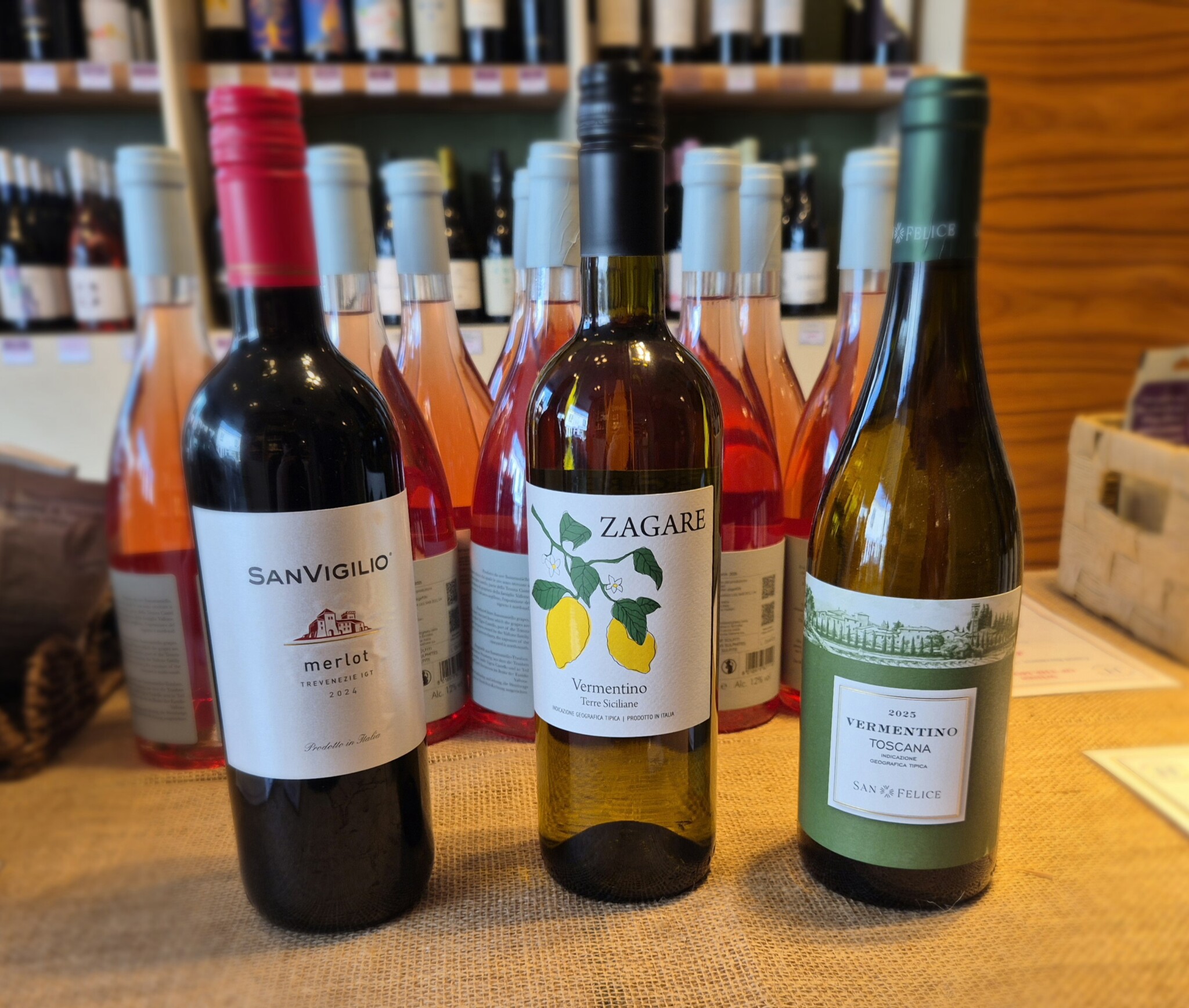
Indicazione Geografic Tipica (IGT)
This is an official recognition that the wine is made predominantly (but not necessarily exclusively) from grapes in a particular geographical area. Although acceptable types of wine and grape varieties are specified, these are not very restrictive.
The IGT areas are quite broad. In most regions of Italy (Lombardy, Veneto, Calabria etc) there is an IGT applicable to the whole region, so wine from any part of that region can qualify. A few regions (eg Marche, Basilicata) just have this single region wide IGT denomination. However, most regions, large and small, also have several sub-areas with their own IGT denomination – look out for these, as they can signify local wines of better than usual quality.
Some IGT areas extend across two or even more regions where there are shared geographical characteristics. An odd fact – Piemonte is the only Italian region with no IGT categories at all, not even one for the whole region – we think this is because the whole region is covered by DOC and DOCG designations, quite an accolade.
Denominazione di Origine Controllata (DOC) – also sometimes Denominazione di Origine Protetta (DOP)
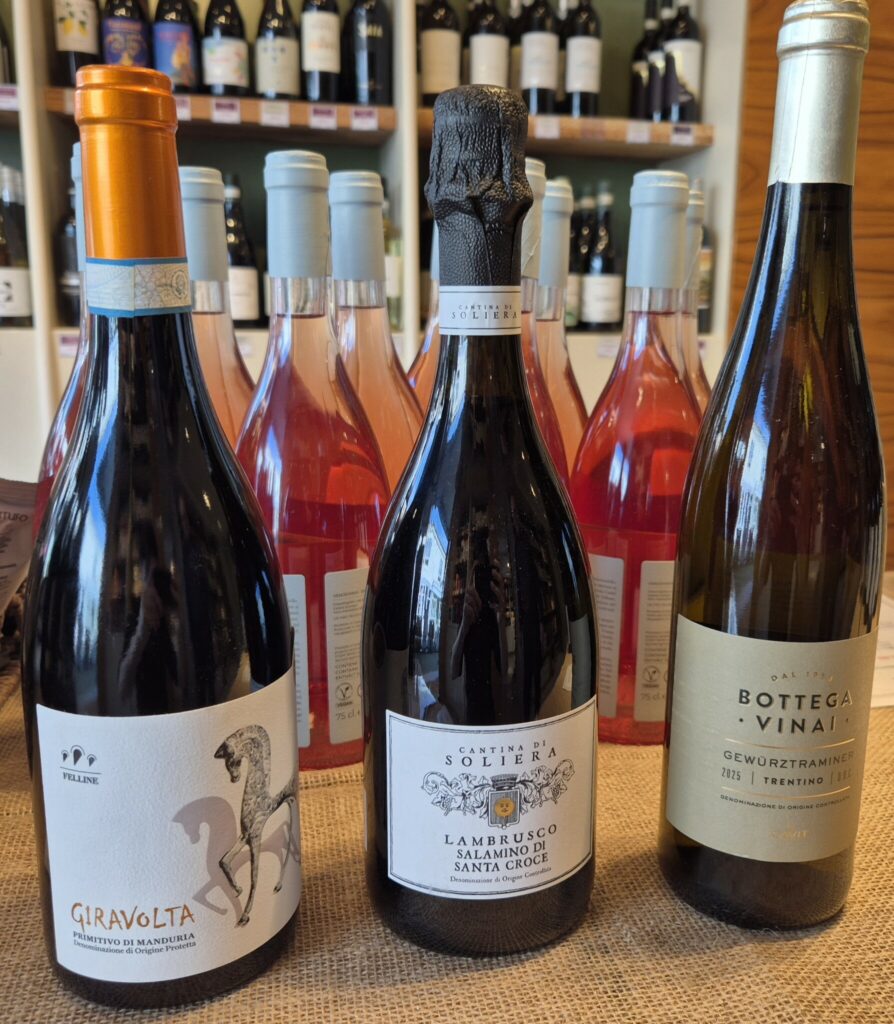
This is the designation of wine of defined quality from grapes grown within a precisely specified area. Within a DOC area, the wine can be red, white, roasato, or spumante, and a single variety or several grape varieties involved – this seems strange, but the geographical area is key.
Wine designated as DOC must not only come from grapes grown in that area, it must also meet some precise requirement of acceptable grape varieties, grape quality, grape variety mixtures, wine making methods etc. The significance is the limited area, so usually the label emphasises the place name.
Sometimes however it also includes the type of wine or grape variety, especially if this is something special (eg Aglianico del Vulture, Basilicata’s flagship red wine grape variety from the mountainous Vulture sub-region near Melfi).
The term riserva is usually allowed in the title only if the wine has been matured for a minimum of two years, implying a higher quality.
Denominazione di Origine Controllata Garantita
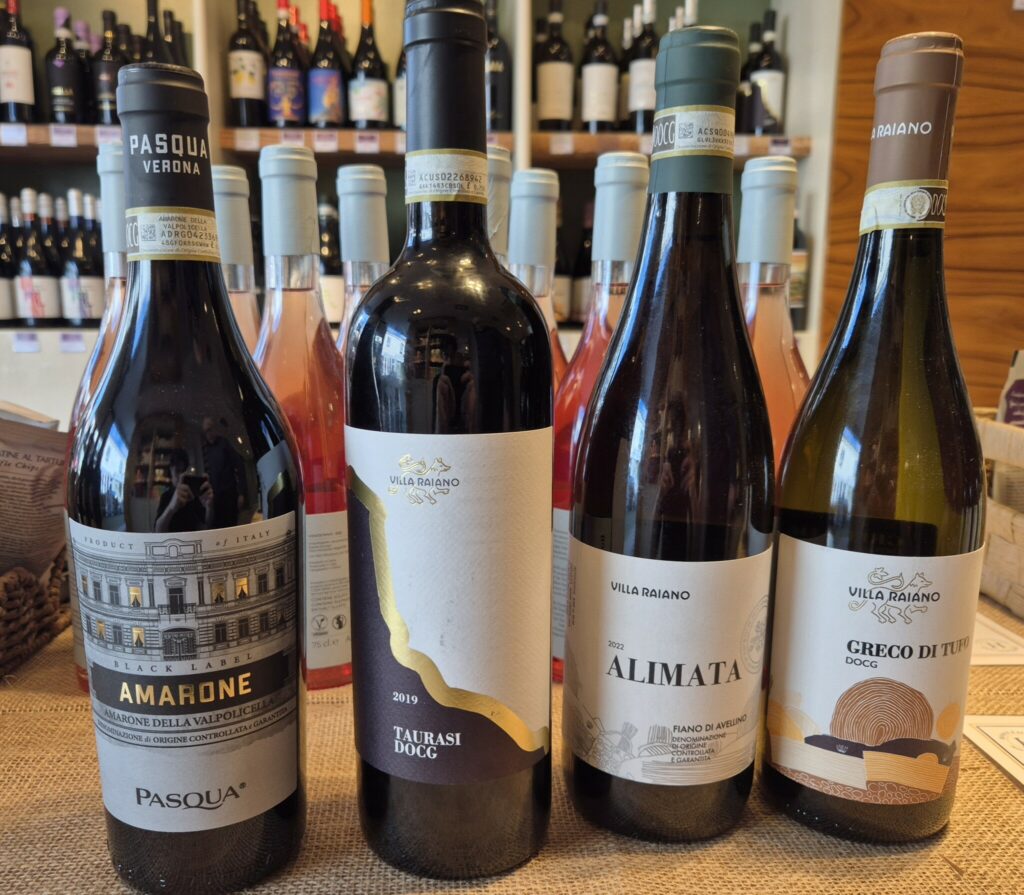
This is a special category of DOC wines. The criteria applied are demanding, and there is a system for independent assessment and tasting to guarantee the highest quality. The category includes some of the most prestigious names in Italian wine. DOCG wine is usually in bottles with a special seal and is invariably expensive. Again, geographical area is the key, so within a DOCG designated area the DOCG classification can be applied to red, white, rosato and spumante (sparkling) wine. In some cases the area name is given to a DOC and to a DOCG wine, the latter sometimes with the term “superiore” added to draw attention to the extra status – but watch out for the difference between Primitivo di Manuria DOC and Primitivo di Manduria DOCG.
CANTINA
The cantina is the supplier of the wine, essentially a local wine wholesaler/supplier. It is more important in Italy than might be the case elsewhere, regarded as some sort of guarantee of quality. So in a restaurant the name of the cantina which supplies their wine will often feature. It is usually less prominent on the label, although some of the wines illustrated here do refer to the Cantina. .
ALCOHOLIC STRENGTH
This varies from about 11.5% to 14.5%, occasionally more, rarely less. White wines tend to be in the 12%-13.5% range, reds 12.5%-14%. Many factors affect the strength, and it is not usually a good guide to the quality of the wine.
PRICE
We do not attempt to offer any price advice. Bargains can be had in every category – we suggest looking around, always being prepared to experiment and if necessary spending a little bit more to try something different. DOCG wines tend to be expensive, sometimes with the prestigious names extremely so. If in Italy, it is always worth looking out for the local IGT and DOC categories, in shops, supermarkets and restaurants; they are almost invariably impressive and well priced.