There are cave and underground churches throughout southern Europe and the Middle East; but there is a heavy concentration in Puglia and the adjoining region of Basilicata.
The silence and intimacy of cave churches (usually called “rupestrian” churches) offer a sharp contrast to the more familiar soaring church architecture, with their domes, high ceilings, arches, naves, towers and buttresses. There are various reasons for their existence, some are very ancient, but many date back only a couple of hundred years.
Particular sites with concerntrations of rupestrian churches include the UNESCO World Heritage site of Matera in Basilicata; and the nearby Puglian towns of Mottola and Massafra. The centro storico of Monopoli has several rupestrian examples in its large collection of churches. The important underground shrine of San Michele at Monte Sant’Angelo in the Gargano peninsula – is really an underground cathedral.
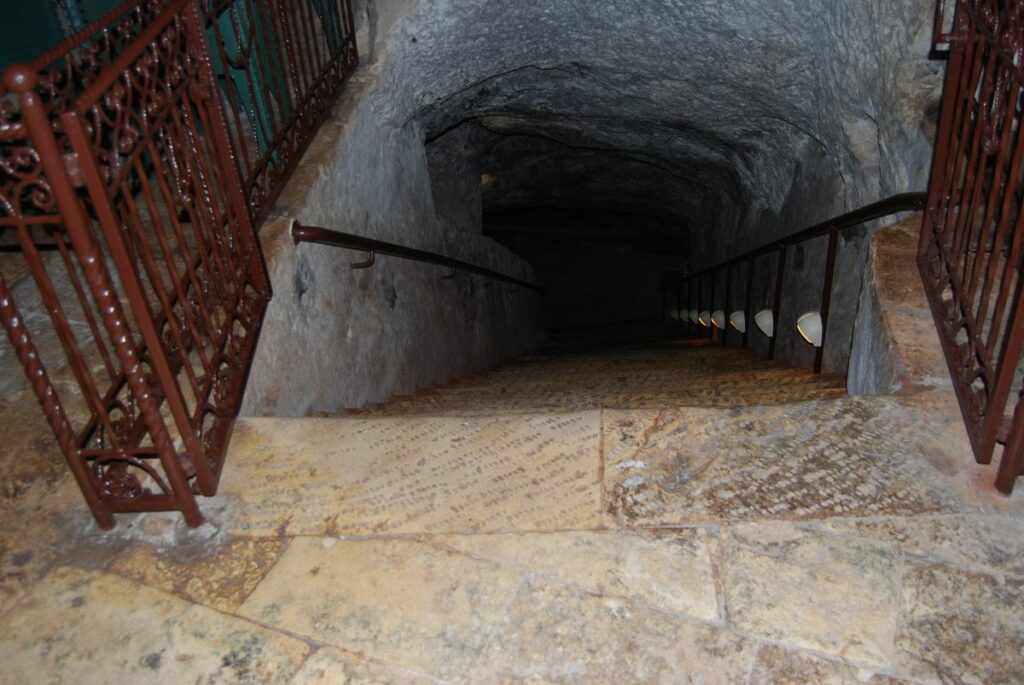
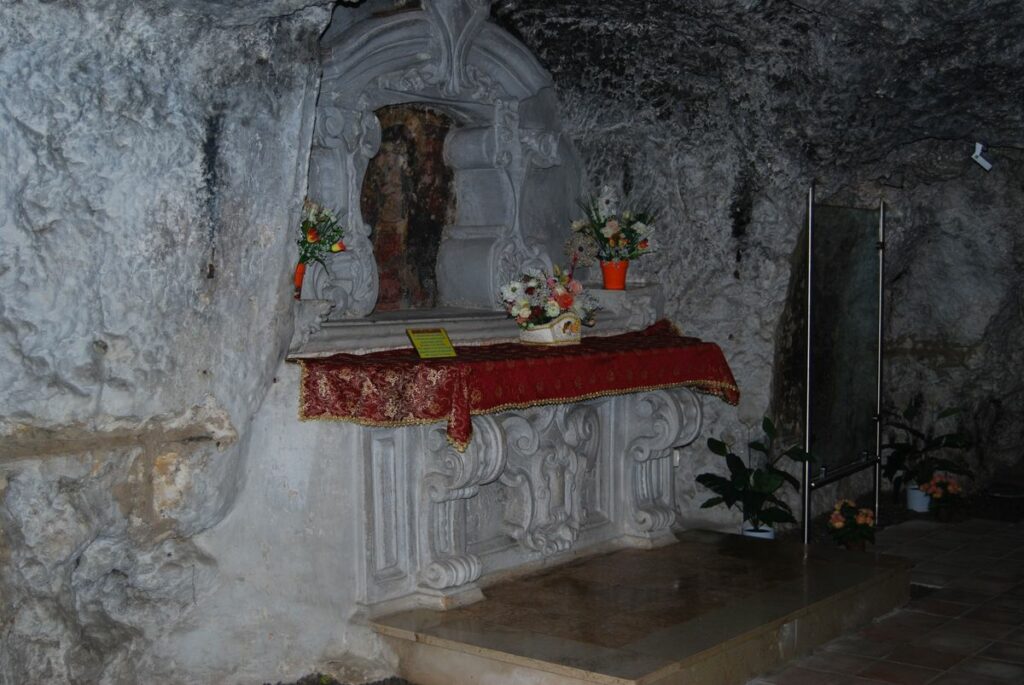
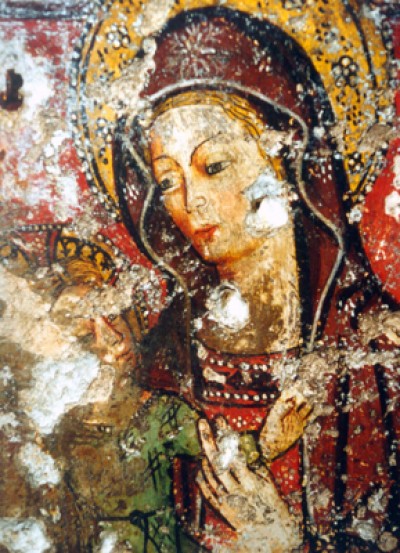
Many of these churches can only be visited in organised groups and/or by paying an admission charge. However, there are also several in open countryside, and usually these can be visited informally and freely. A good example is the Santuario di Santa Maria di Belvedere (see photographs below), near Carovigno in Brindisi Province. This is out in the open countryside in a commanding viewpoint on the edge of an escarpment looking out towards the sea. There is a a small but attractive church on the surface constructed in 1875, well worth a visit in itself. But then go down steps into two levels of underground chapels to experience the silence and cool atmosphere valued by many generations. These were constructed in the 16th century in natural caves. Recently discovered and beautifully restored frescoes have been dated to 1530.