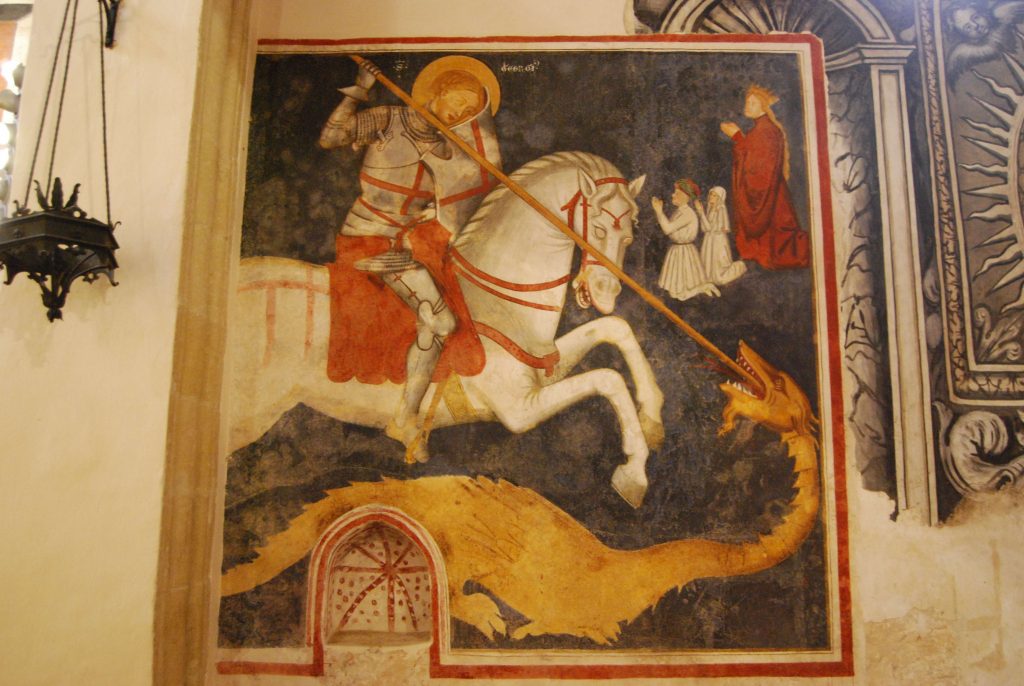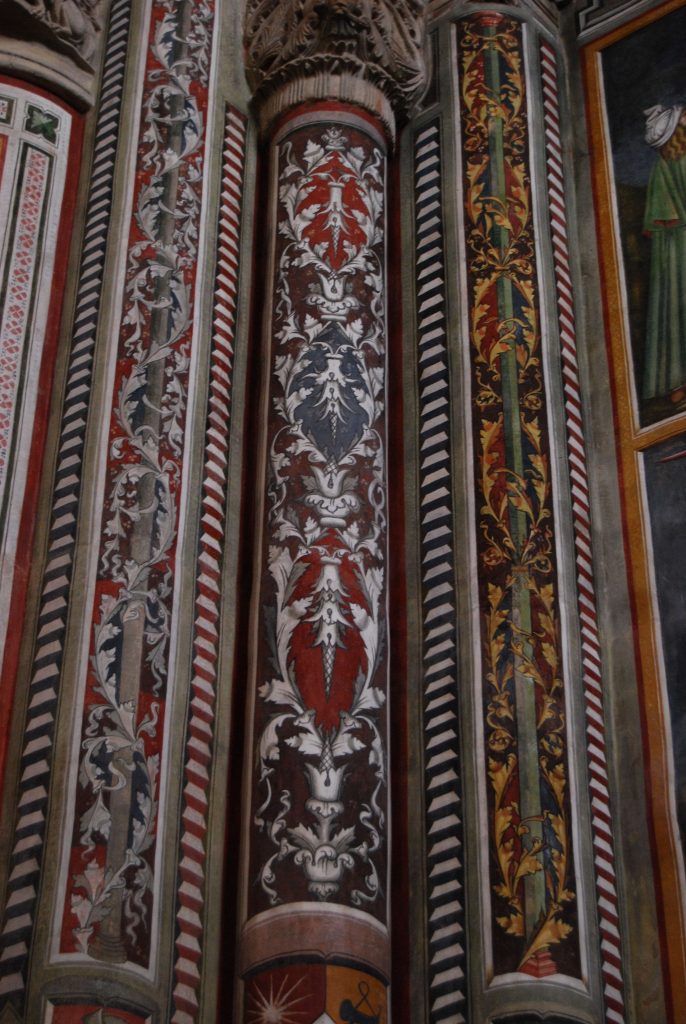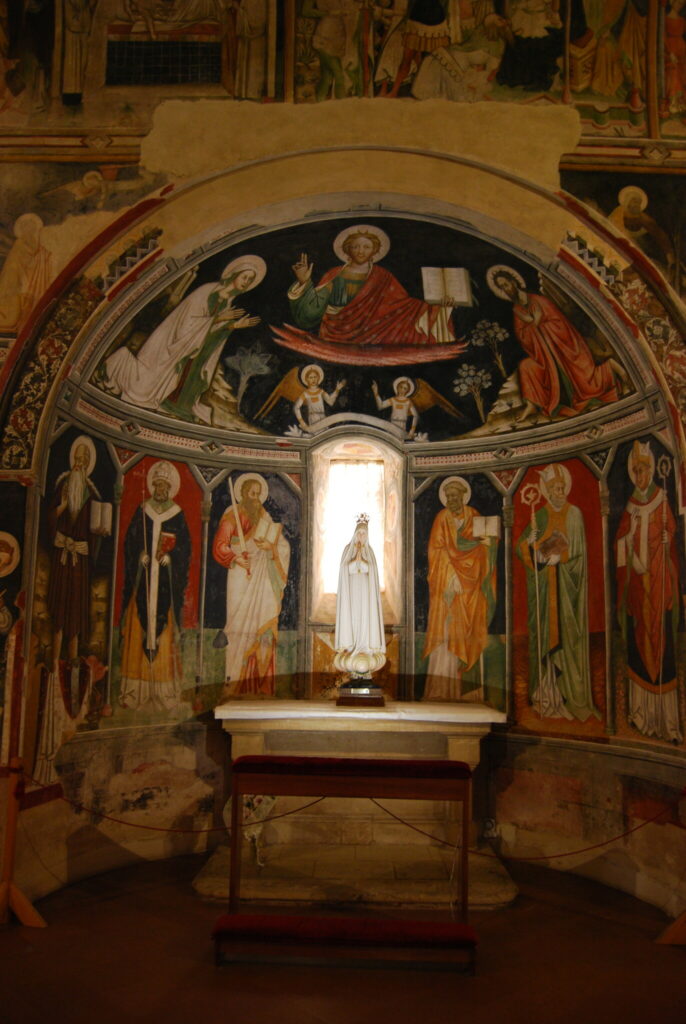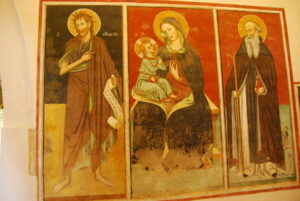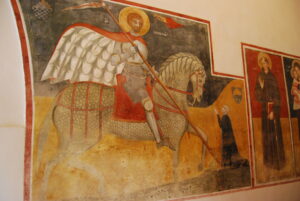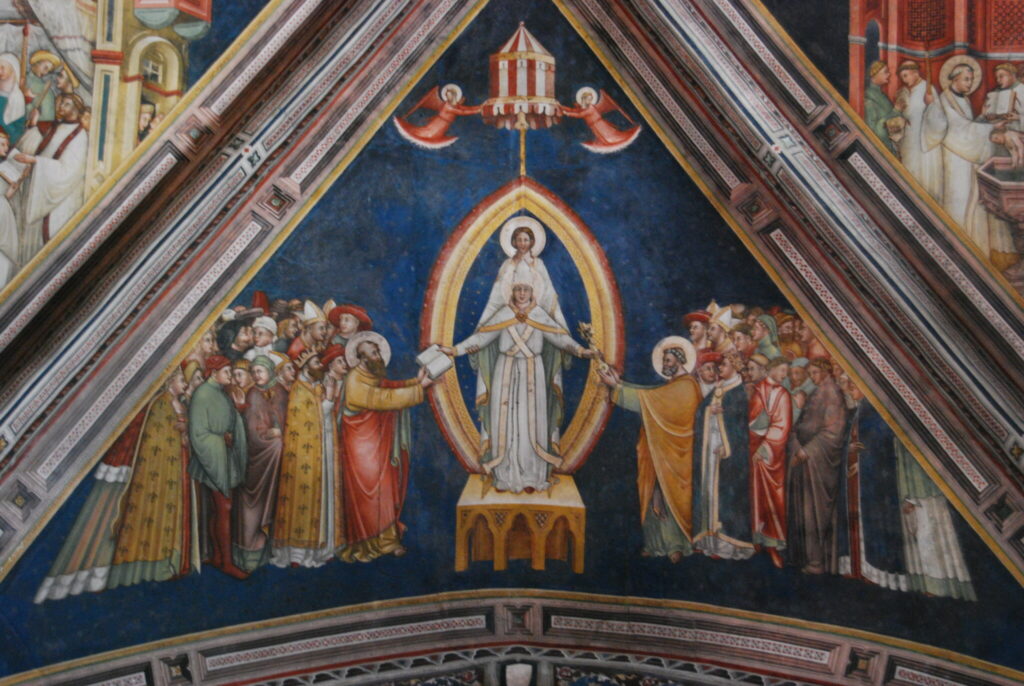
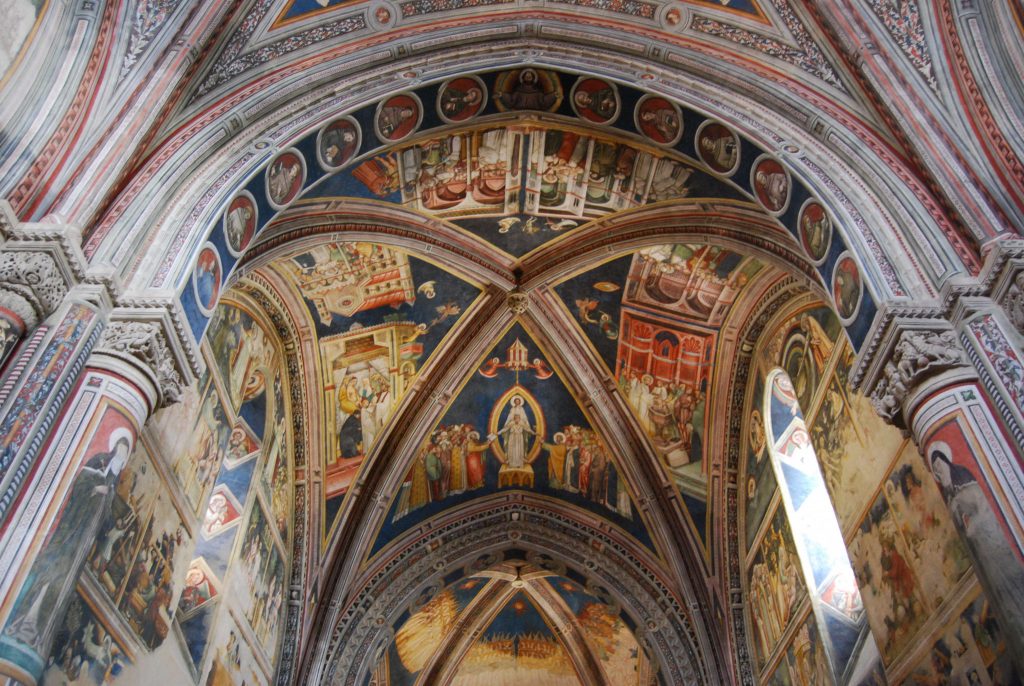
We are often asked to suggest something special to visit in Puglia which is not well known. The Basilica di Santa Caterina d’Allesandria is exactly that. A plain and unprepossessing exterior conceals an enormous and complicated interior, every surface decorated with elaborate frescoes. The cycles of frescoes are regarded as second only in quality and significance to those in the Basilica di San Francesco in Assisi.
So if you want to visit something which ranks among the most attractive, interesting and iconic cultural achievements in European history, this is it.
Galatina is a small town south west of Lecce. It has a beautiful historic centre dominated by majestic baroque palazzi; and much else to attract visitors, see details elsewhere on our website. However, the highlight is the basilica with its frescoes.
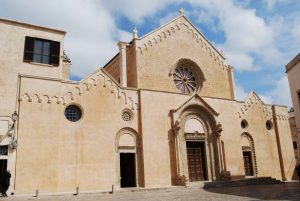
This is the town’s earliest church, built in 1361-1391 by the Orsini family’s Count Raimondello, who had brought back a relic of Saint Catherine (her finger, which is preserved in the church) from the Holy Land. It is constructed in Gothic/Romanesque style in contrast to other, later buildings in this part of Puglia. The frontage is very simple, although the main doorway has some beautiful decorative details including a carved lintel depicting Jesus Christ and the twelve Apostles; and there is an attractive rose window above.
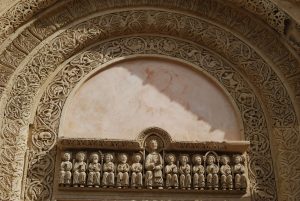
However, step inside – free, open mornings and evenings – and you will encounter the frescoes.(Once your eyes have adjusted to the gloom. It is essential to go with euro coins to activate the illuminations so you can see things properly).
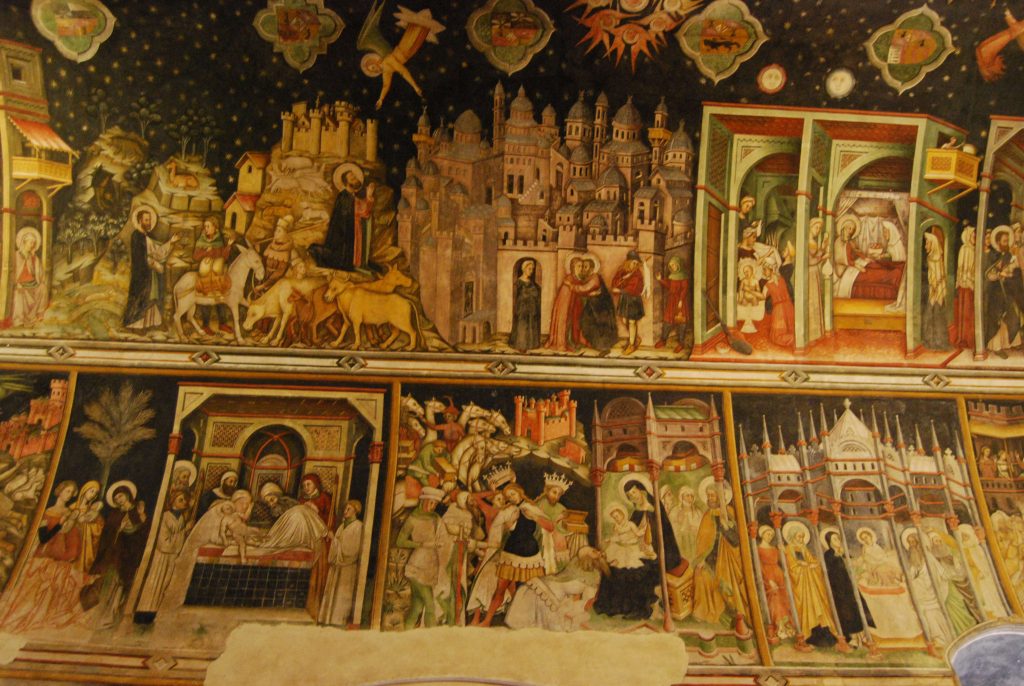
They are like a picture gallery, extending everywhere over the walls, pillars, arches, ceilings etc. Commissioned by Maria d’Enghien, widow of Count Raimondello, in the first half of the fifteenth century soon after the church was built, they consist of a series of pictorial cycles: the Apocalypse; Genesis; the Sacraments; the Evangelists; the life of Christ; and the life of Santa Caterina. This major project involved specialists from Naples and elsewhere who were students of Giotto.